I had never thought about reading Genesis 1:1 and 31 as if they were the bookends to the creation story, yet they flow like a perfect summary of everything God created. Read them as if it was a single statement and that 29 verses did not come between them.

In the beginning God created the heaven and the earth. And God saw every thing that he had made, and, behold, it was very good.

Yet something happened that caused everything God had made to not be perfect anymore—sin. Because of sin we have death, destruction, disease and decay.

We often talk about getting back to nature and experiencing the world the way God intended it, yet it is impossible to do so. Do you realize that everything good and wonderful we can experience and enjoy in nature is cursed? It used to be so much better than it is today. Everything was perfect according to God’s Word. But it is not perfect today. There is the curse of sin on this world.

For we know that the whole creation groaneth and travaileth in pain together until now.

—Romans 8:22

photo of the Grand Canyon

The beauty and splendor of the Grand Canyon is a result of the Genesis flood. Without that punishment on sin we would not have the Grand Canyon. As beautiful as the canyon is to observe (it is more incredible in real life than pictures can ever portray), we should step back and remember that it is a scar upon God’s creation. God intended a world that was so much better.

This was brought up today when a friend was talking about a question we often hear asked, “How could a loving God allow bad things to happen?” The truth is that God did not cause bad things to happen on the earth. It is because of sin we have disease and destruction today.

Bad things happen to good people because sin is in this world. Yet there is coming a day when God will make all things new again.

And I saw a new heaven and a new earth: for the first heaven and the first earth were passed away; and there was no more sea. And I John saw the holy city, new Jerusalem, coming down from God out of heaven, prepared as a bride adorned for her husband. And I heard a great voice out of heaven saying, Behold, the tabernacle of God is with men, and he will dwell with them, and they shall be his people, and God himself shall be with them, and be their God. And God shall wipe away all tears from their eyes; and there shall be no more death, neither sorrow, nor crying, neither shall there be any more pain: for the former things are passed away. And he that sat upon the throne said, Behold, I make all things new. And he said unto me, Write: for these words are true and faithful.

—Revelation 21:1-5
In John 20 verse 25 Thomas said that he would not believe Jesus had risen from the dead and was alive unless he was able to put his fingers in the nail prints of Jesus’ hands and side. When Jesus reappeared eight days later he walked in and Thomas saw him with his own eyes. Without the need for putting his fingers in the wounds of Jesus he declared that Jesus was alive and was God.[pullquote]The disciples were with Jesus for more than three years but they seemed to not completely understand that Jesus was God. They saw His miracles and heard His teaching, but their words and actions spoke to the fact that they did not completely understand who Christ was. Here Thomas proclaimed, “my Lord and my God.” He finally recognized Jesus for who he was—the God of the universe.[/pullquote]

Jesus was willing to allow Thomas to follow through with his proclamation for not believing unless he touched Jesus (even though Jesus would not allow Mary to touch Him in verse 17). Thomas was satisfied. Jesus acknowledged that Thomas wanted to see, hear and touch Him. After that though, Jesus turned the emphasis from experiencing the presence of Christ to believing through faith.

Jesus then said to Thomas, “blessed are they that have not seen, and yet have believed.” I believe Christ was speaking for our benefit. We have not been able to physically experience Jesus, but through faith in His Word we can know Him.

We are told in Romans 10:17, “So then faith cometh by hearing, and hearing by the word of God.” This was after an explanation that there is a need for people to proclaim the God’s Word. We can know God and Jesus Christ through the Bible. We don’t need the experiences. In fact, Jesus proclaimed a blessing on those who believe in Him through faith and not through sight.

To know Jesus Christ we need to read and study the Bible personally. It is great to be part of a church and to have a pastor and Sunday School teachers who will guide you, but personal Bible study is where your faith will increase.

The lyrics to this song were written by J. Wilbur Chapman. This song is a progression of the birth, crucifixion, burial, resurrection and second coming of Christ. The five verses are repeated in the chorus.

Allow me to rearrange the song a little and put the chorus at the very end. Read through each of the verses and then read the chorus as if it were a summary of the five previous verses and I think you will get a renewed appreciation for the song. After gaining an appreciation for the lyrics it will probably bother you as much as it bothers me when your church does not sing all the verses to this great hymn. It seems incomplete when only three or four verses are sung.

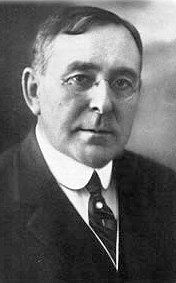
A photo of John Wilbur ChapmanOne day when heaven was filled with his praises,
One day when sin was as black as could be,
Jesus came forth to be born of a virgin—
Dwelt amongst men, my example is he!

One day they led him up Calvary’s mountain,
One day they nailed him to die on the tree;
Suffering anguish, despised and rejected:
Bearing our sins, my Redeemer is he!

One day they left him alone in the garden,
One day he rested, from suffering free;
Angels came down o’er his tomb to keep vigil;
Hope of the hopeless, my Saviour is he!

One day the grave could conceal him no longer,
One day the stone rolled away from the door;
Then he arose, over death he had conquered;
Now is ascended, my Lord evermore!

One day the trumpet will sound for his coming,
One day the skies with his glories will shine;
Wonderful day, my beloved ones bringing;
Glorious Saviour, this Jesus is mine!

Refrain
Living, he loved me; dying, he saved me;
Buried, he carried my sins far away;
Rising, he justified freely, for ever:
One day he’s coming—O, glorious day!

Mr. Chapman was the author of another hymn that has great meaning, Our Great Savior!

Addicted to Things

Reading The Pursuit of God by A. W. Tozer I came across the following passage as Tozer was talking about replacing God with things.

There is within the human heart a tough fibrous root of fallen life whose nature is to possess, always to possess. It covets “things” with a deep and fierce passion. The pronouns “my” and “mine” look innocent enough in print, but their constant and universal use is significant. They express the real nature of the old Adamic man better than a thousand volumes of theology could do. They are verbal symptoms of our deep disease. The roots of our hearts have grown down into things, and we dare not pull up one rootlet lest we die. Things have become necessary to us, a development never originally intended. God’s gifts now take the place of God, and the whole course of nature is upset by the monstrous substitution. Our Lord referred to this tyranny of things when He said to His disciples, “If any man will come after me, let him deny himself, and take up his cross, and follow me. For whosoever will save his life shall lose it: and whosoever shall lose his life for my sake shall find it.”

This reminds me of Romans 1:25 which says, “Who changed the truth of God into a lie, and worshipped and served the creature more than the Creator, who is blessed for ever. Amen.” We are so quick to replace God with the gifts from Him.

How would parents feel if their children only wanted to be around them because of the gifts the parents give? Yet we do this with God so often.

I shared this Tozer passage with a friend on the morning I read it. He commented that the word “thing” is such an empty sounding word. It is a generic, non-descriptive word that means everything and nothing all at once. Yet we crave these “things.”

Are you in love with God, or just the things He allows you to posses.

Sowing and Reaping Revisited

photo of wheat in the fieldThis morning the pastor at church said he was going to talk about the law of sowing and reaping. A few of the same thoughts I shared previously made their way into the pastor’s sermon, but then he shared a couple of other good points. I thought you might enjoy his outline.

Introduction

Isaiah 33:1; Galatians 6:7-10

God will forgive your sins. He has promised to do so (1 John 1:9). However, when you set that sin in motion, you also set in motion the law of sowing and reaping.

You cannot break God’s law of sowing and reaping.

Wise sowers always sow with the harvest in mind.

  • The wise sower anticipates the harvest in the future
  • Sometimes we forget this spiritually
  • As you get older you understand the law better and try to help those younger than you also understand

You will reap what you sow.

You won’t reap something different than you sow. You cannot plant a pear tree and expect to get apples from it. You cannot sow sin and expect to reap blessings.

Jacob

Jacob deceived his father by pretending to be the older son. Jacob was deceived by his father-in-law by receiving the elder daughter when he was expecting the younger.

Ahab

Ahab wanted the land that belonged to Naboth (1 Kings 21). When Naboth would not sell it to him, Ahab went home and pouted to his wife Jezebel. Through cunning and deception she had Naboth killed and presented the land to her husband. As a result the prophet Elijah proclaimed that Ahab would be slain and the dogs would lap up his blood from the same place where Naboth was killed. In 1 Kings 22 Ahab was slain and the prophecy was fulfilled.

Paul and Stephen

Before Saul of Tarshish was saved he stood and watched the stoning of Stephen. Years later after his salvation and a name change to Paul the Apostle, he too was stoned. While Paul survived the stoning (unlike Stephen), he reaped what was sown earlier in his life.

Whatever you are sowing now you will reap later.

You always reap more than you sow.

  • One seed generates much more than originally planted

2 Corinthians 9:6

This should not always be seen as a negative aspect of sowing and reaping. The law is true when sowing righteousness too.

Innocent people are affected by what you sow.

  • Humanity was impacted by the sin of Adam and Eve.
  • All of Egypt was blessed by the obedience and trust Joseph had toward God.
  • Innocent bystanders can be blessed or cursed by the things you sow.

What are you sowing?

 Page 14 of 30  « First  ... « 12  13  14  15  16 » ...  Last »